Question-based Engagement
Right Question Institute & Third Floor Design
Complementary Approaches
PATHWAY CONVERSATIONS™
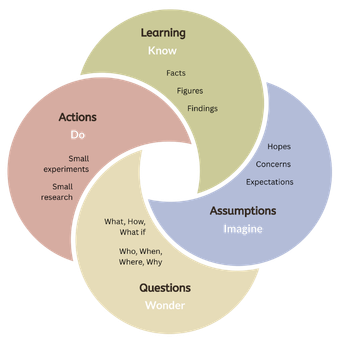
Third Floor Design offers Pathway Conversations™. It is a framework built on four conversations—Learning, Assumptions, Questions, and Actions—that are directly linked to four essential gifts every person brings to a group: Knowing, Imagining, Wondering, and Doing.
When faced with a change, an opportunity, or a challenge, a group names what it knows for certain, surfaces the wishes, concerns, and expectations behind that issue, turns those into questions, and takes action to answer these questions. This sequence is one cycle. A group can run the cycle again, each time starting Learning, and bringing more information with each iteration.
The link between Assumptions and Questions is of prime importance in Pathways because unconscious and unspoken assumptions limit the quality and power of our questions. Assumptions become the fuel for new questions and shift groups our of perceived certainty and into curiosity.
Groups using Pathways form questions from the Assumptions they have expressed. The Questions conversation turns each stated assumption into one or more questions. The assumption "staff are resistant" becomes a question instead like "what is making staff cautious here?" or “how might we understand how staff are feeling right now?” The more questions we ask, the better our questions become. More and better questions lead to new and innovative action.
RQI’S TECHNIQUES AND PATHWAY CONVERSATIONS™
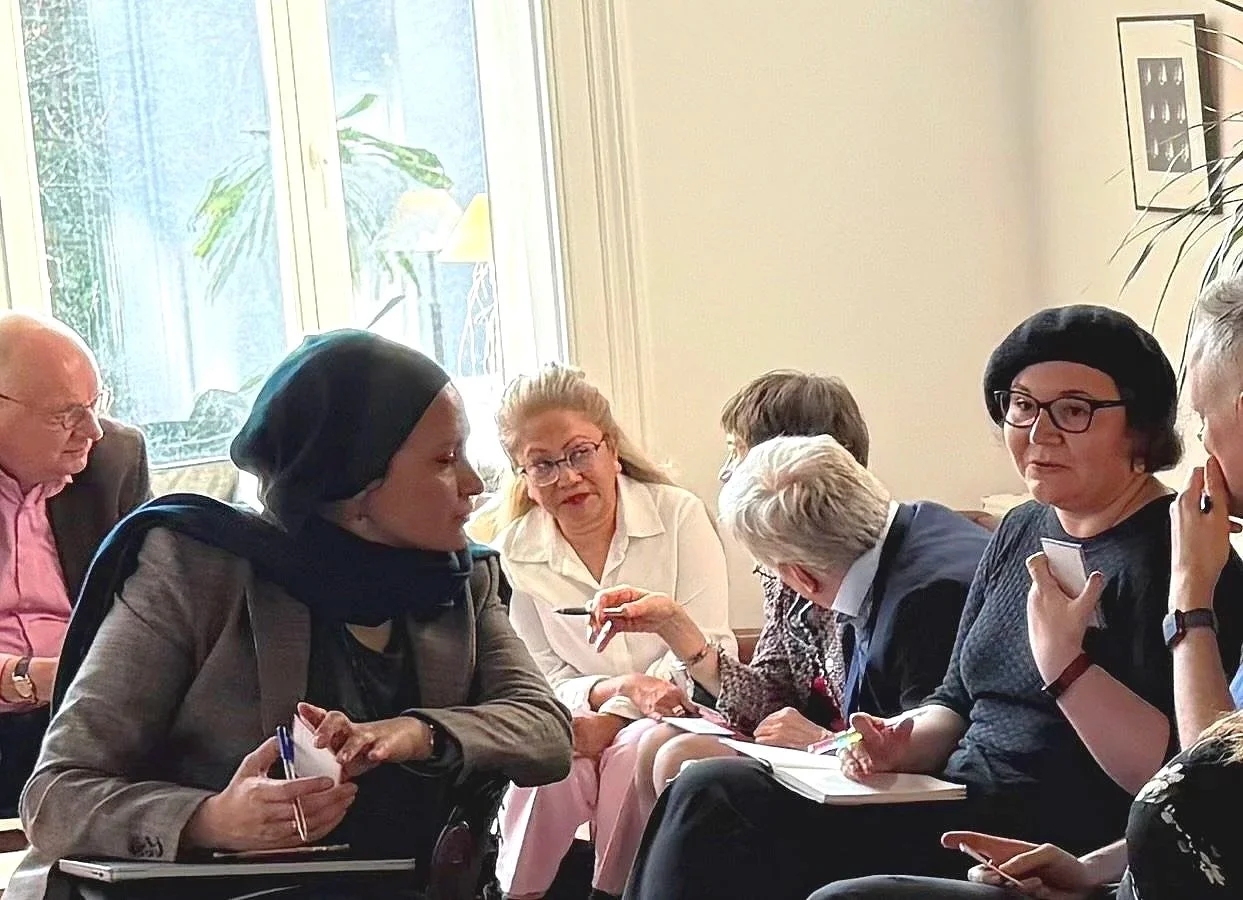
When working with Pathway Conversations in the field, it becomes evident quite quickly that most people were never taught to ask a good question. The Right Question Institute’s Question Formulation Technique exists because this is real and common concern. And Pathway Conversations leans heavily on QFT, including the use of open and closed questions, to improve the Questions conversation and to encourage groups to develop more and better questions.
MOVING FROM PERSON AND SITUATION TO PROCESS AND SYSTEM CHANGE
RQI’s QFT and Voice in Decisions Technique both connect a person to the structure they're navigating: QFT to a question and learning; VIDT to a decision and a process. A patient learns to ask sharper questions of her doctor; a parent learns how to weigh in on a decision the school controls. Both techniques focus on individual action to answer questions and make decisions. Neither technique focuses on structural or system change.
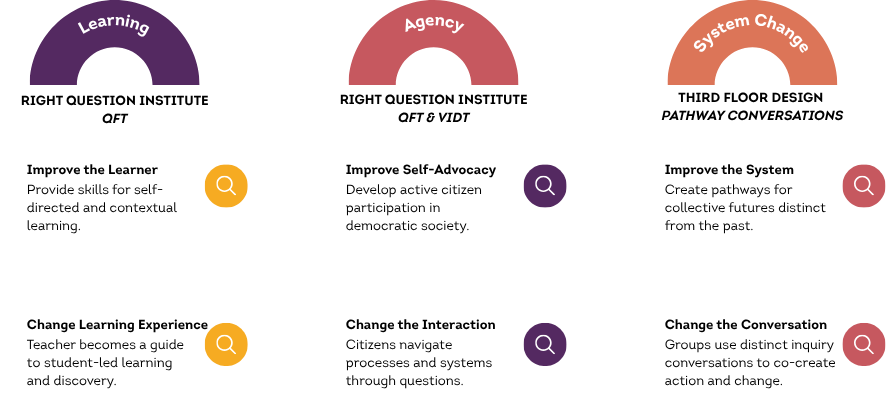
Pathway Conversations starts from the premise that the structure and the processes can change. And a group's role can include developing a better way forward within an existing structure or by changing how things are done. QFT does its job well, and Pathway Conversations starts exactly where QFT leaves off. Where QFT teaches a person to ask a good question, Pathway Conversations gives a group the structure to act on it, together, over and again.
LEVERAGING YOUR QUESTION-BASED MOMENTUM FOR ORGANIZATIONAL CHANGE
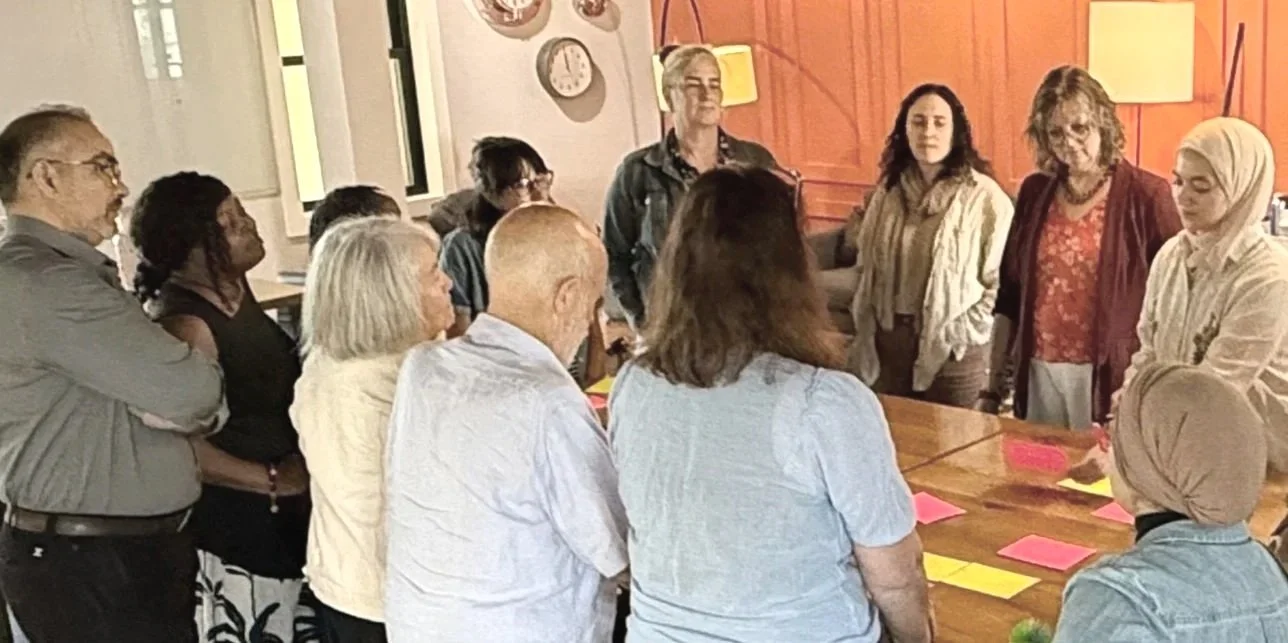
There are many ways to leverage the power of Pathway Conversations as a way of engaging faculty, staff, parents, and the broader community in the improvement and innovation of school programs and services.
Here are just some prompts for gatherings:
Struggling students or parents
Being proactive with technology—screens, social media, AI
Onboarding new faculty, staff, students, and parents
Attracting and retaining faculty, staff, and students
Making wise decisions with budget cuts
These can be one-time or ongoing gathering of 60-90 minutes each. They can be in-person or remote (hybrid is not advised) and can involve any number of people that physical space or technology can accommodate.
We provide shared virtual whiteboards for capturing and organizing everything that comes from these sessions to build both transparency and trust. We work with you to craft effective and welcoming invitations. And we co-facilitate the first two sessions with you to develop internal capacity for future sessions.