Engaged
Leaders

Engaged
Teams
Leadership Development for Higher Education
Third Floor Design offers a ten-week leadership development program for college and university leaders. The program builds leadership capacity and culture together, and measures growth by what changes leaders make with their teams.

The Value of Leadership Development
Colleges and universities are complex systems. Academic, student-facing, and administrative units depend on one another, and decisions made in one unit shape the work of many others. Leaders at every level manage competing priorities, limited resources, and ongoing change, often with few opportunities to develop the skills this work requires.
Leadership development gives leaders time, structure, and practice to strengthen how they engage their teams, make decisions, and move work forward. As leaders grow, the effects extend to their teams, to the units they work alongside, and to the students the institution serves.

Our Approach
Traditional models of leadership assign responsibility for answers and decisions to one individual. In a complex higher education system, this model places a heavy demand on leaders and limits what their teams contribute.
Third Floor Design's approach is grounded in non-heroic, distributed leadership. The people closest to the work hold knowledge that matters to its success, and leadership is shared across levels. Leaders who practice this approach extend trust to their teams and earn it in return by relying less on positional authority. We call this entrusting leadership. Shared power gives team members a meaningful voice in the decisions that affect their work, and over time builds the agency, accountability, and shared responsibility that sustain change.

How the Program Works
Our Leadership Development programs combine cohort workshops with small-group coaching, so leaders learn from one another's experience throughout. Each leader applies what they learn to an existing priority in their own unit.
Workshops and coaching sessions cover topics such as:
Assessing team readiness for change
Entrusting leadership and shared power
Turning problems and complaints into action
Leading through change and uncertainty
Designing small experiments to test new approaches
Collaborating across units.

The program is presented in the following phases:
Preparation. A discovery survey asks leaders where they and their staff most struggle and where they want to improve.
Launch. Leaders learn the Pathways tools and develop the outcome measures they will work toward with their teams.
Implementation. Leaders put the tools to work with their teams, supported by ongoing small-group coaching.
Learning and Refinement. Leaders review progress with peers and refine their approach.
Outcomes and Next Steps. Leaders and sponsors receive reports on growth and recommendations for next steps.
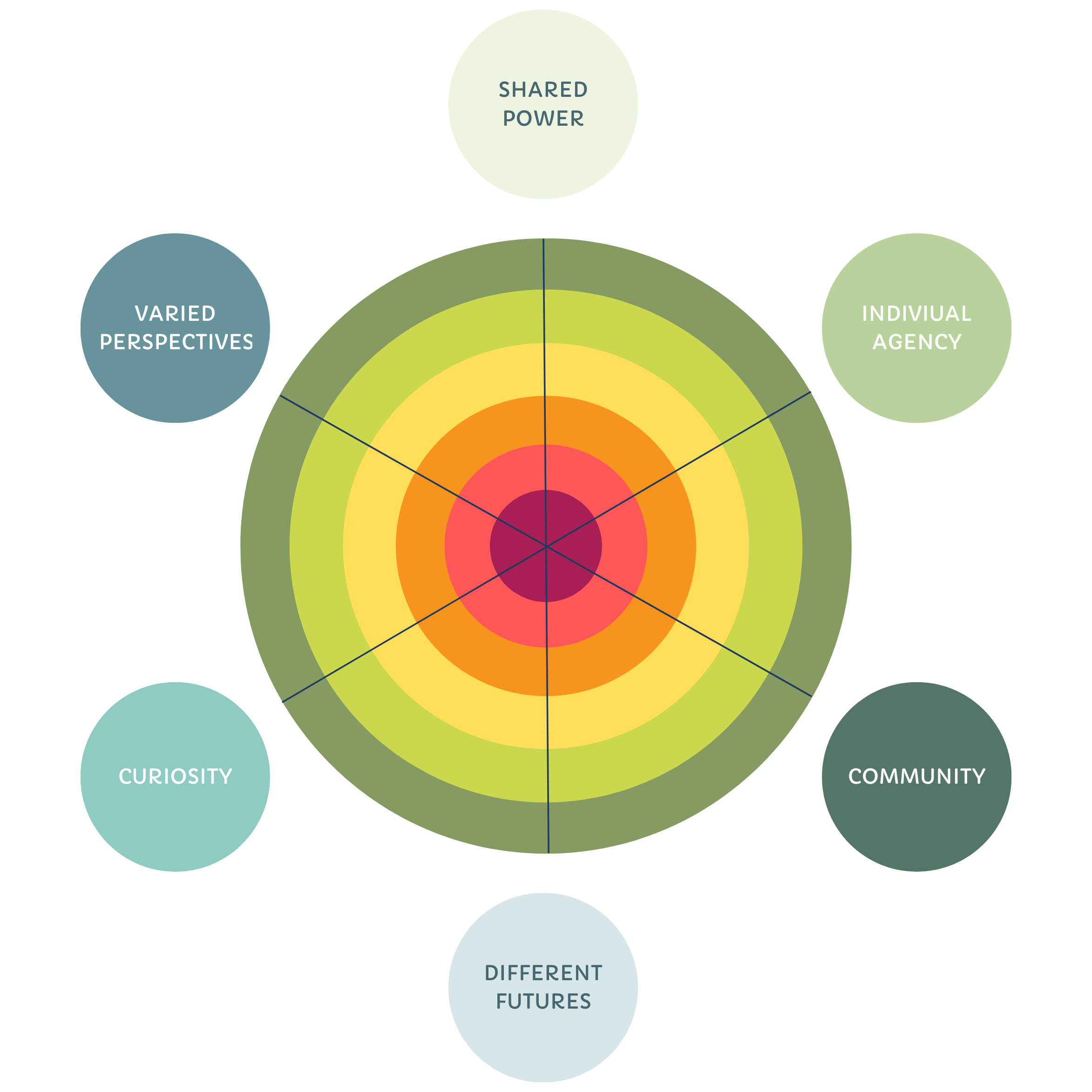
Two connected tools give leaders a practical structure for their development:
Pathway Principles: six conditions a team needs for entrusting leadership and shared responsibility. Leaders use them to see where these conditions are strong and where they need attention.
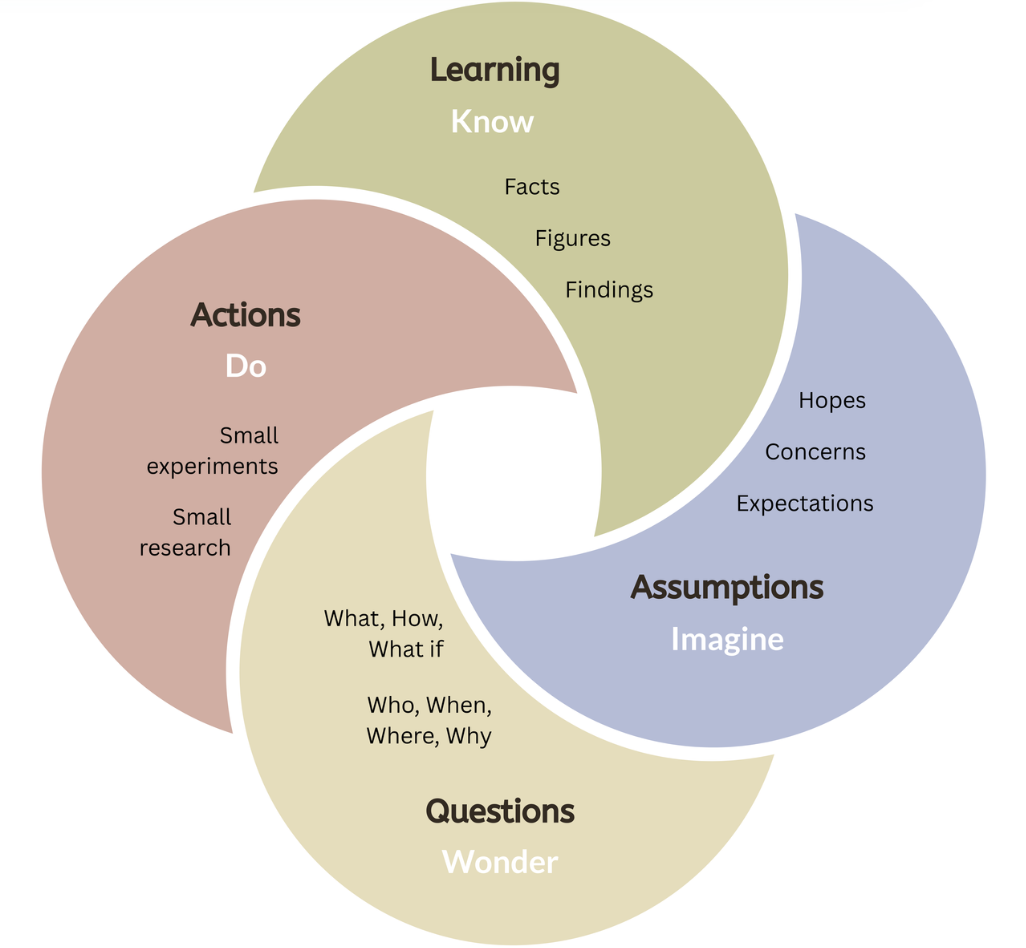
Pathway Conversations™: a repeatable cycle of four conversations (Learning, Assumptions, Questions, Actions) that moves groups from shared facts to small, practical action. QuikStart, a 15-minute version, turns any voiced problem or opportunity into focused collaboration. models of leadership assign responsibility for answers and decisions to one individual. In a complex higher education system, this model places a heavy demand on leaders and limits what their teams contribute.
Benefits for leaders, teams, and their institutions include:
Decisions informed by the people who know the work best
A clear, repeatable process for moving from problems and complaints to action
Responsibility distributed across teams, reducing the load on individual leaders
A shared language for collaboration across units
Leadership and culture practices that continue after the engagement ends.
Measuring Growth

We measure growth by what leaders do differently and how their teams experience those differences.
Leader-designed success questions.
Early in the program, each leader writes the questions they will ask their team at the close, based on the outcomes they want to see. At the end, teams answer these questions together in a facilitated conversation, offering open and helpful feedback that builds respect and trust.QuikStart adoption.
Throughout the program, we track how often teams use QuikStart, who starts them, and how they finish. A rising share started by team members shows agency and shared power growing on that team.
What Your Institution Receives
A ten-week program of cohort workshops and small-group coaching, tailored to your leaders' challenges
A discovery survey and a readiness picture of your cohort
Individual reports for each leader and a cohort report for sponsors
A shared, repeatable practice that leaders and their teams continue to use
Options to extend the work, including Train-the-Trainer preparation for internal facilitators
Who We Are
Third Floor Design is a community engagement and organization development firm, grounded in neuroscience and in a shared conviction: when leadership is shared, engagement grows.
Jane Rogan brings more than 25 years of experience inside academia and an MS in Higher Education. She knows how work moves across academic and administrative units, and she designs programs that fit an institution's context and its people's capacity.
Jack Ricchiuto has spent more than 40 years teaching and coaching leaders at every level, including executives, at institutions such as Harvard Business School, UC Berkeley, and Vanderbilt University. He is the author of 40 books and originated the Pathway Conversations framework.
Together, Jane and Jack offer a deep knowledge of how colleges and universities work and long practice in developing the leaders within them.
We welcome the opportunity to present the program in more detail and tailor it to your institution. Email jane@thirdfloordesign.org to find out more.